

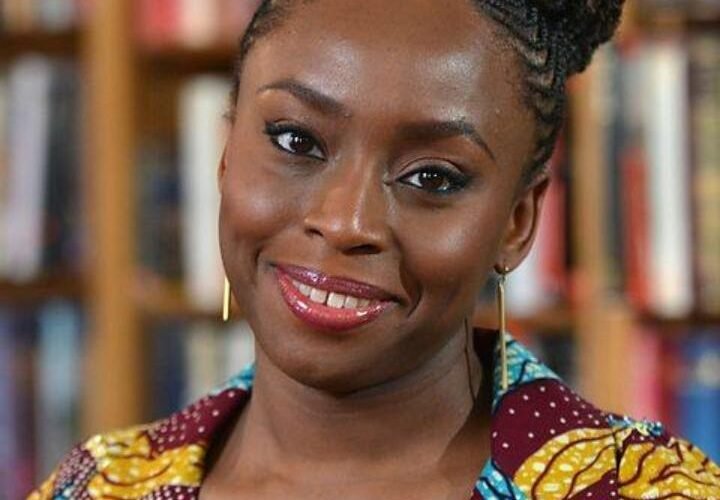
Chimamanda Ngozi Adichie is a globally celebrated Nigerian writer, speaker, and feminist known for her powerful storytelling and thought-provoking books about identity, culture, gender, migration, and African history. Her words have crossed borders, languages, classrooms, and cultures. What makes Chimamanda different from many famous writers is not only her intelligence or literary success. It is the way she tells ordinary human stories with honesty and emotional depth. Whether she writes about war, migration, family struggles, love, or feminism, her stories feel personal and real.
Her books are often described as powerful because they combine beauty, truth, pain, humour, and history all at once. Over the years, Chimamanda Ngozi Adichie has become one of Nigeria’s most celebrated authors. Her books are studied in universities, quoted in speeches, discussed online, and recommended across generations. Yet behind the global recognition is the story of a young Nigerian girl who once sat quietly reading books in Nsukka without knowing she would someday become one of the most influential literary voices in the world.

Early Life and Childhood
Chimamanda Ngozi Adichie was born on September 15, 1977, in Enugu, Nigeria. She was raised in Nsukka, a town strongly connected to education because of the University of Nigeria located there. Growing up in this environment played a major role in shaping her future as a writer. She came from an academically gifted family. Her father, James Nwoye Adichie, worked as a professor of statistics, while her mother, Grace Ifeoma Adichie, became the first female registrar of the university. Their home was filled with books, intellectual conversations, discipline, and curiosity.
Unlike many children who discovered reading later in life, Chimamanda developed a strong reading habit at a very young age. Books became part of her daily life. However, most of the stories she first encountered were foreign books written by British and American authors. The characters had blue eyes, played in snow, and ate foods unfamiliar to Nigerian life. For some time, she believed stories only happened in foreign countries. That changed after she discovered African literature, especially the works of Chinua Achebe.
Reading Achebe transformed her understanding of storytelling. She suddenly realized that African people, Nigerian culture, local languages, and everyday experiences could also exist inside books. That discovery changed everything. It gave her permission to write honestly about the world she knew.
Education and the Journey Abroad
Before becoming a famous writer, Chimamanda briefly studied medicine and pharmacy at the University of Nigeria. Although she performed well academically, she eventually realized her true passion was storytelling and communication.
At the age of nineteen, she moved to the United States for further education. Leaving Nigeria exposed her to a completely different social and cultural environment. It was also during this period that she became more aware of issues surrounding race, identity, and migration, themes that would later appear strongly in her writing.
She attended Eastern Connecticut State University, where she studied communication and political science. She later earned a master’s degree in creative writing from Johns Hopkins University and another master’s degree in African studies from Yale University.
Her educational background helped sharpen both her literary skills and intellectual perspective. She learned how to combine storytelling with social analysis in a way that remained emotionally engaging for readers.
The Beginning of Her Writing Career
Long before the world knew her name, Chimamanda had already started writing stories, poems, and plays. One of her earliest dramatic works focused on the Nigerian Civil War, showing that she was already interested in history, memory, and political identity from a young age. Her professional breakthrough came with the publication of Purple Hibiscus in 2003.
The novel introduced readers to Kambili, a quiet teenage girl growing up under the control of a strict and abusive father. Through this story, Chimamanda explored religion, silence, fear, family conflict, and freedom in a deeply emotional way.
Critics immediately recognized her talent. The novel received international praise and won important literary awards. Many readers were surprised that such a mature and emotionally rich book came from a relatively young first-time novelist. But for Chimamanda, this was only the beginning.
Half of a Yellow Sun and Global Recognition
If “Purple Hibiscus” introduced her to the literary world, Half of a Yellow Sun established her as a major global writer.
Published in 2006, the novel focused on the Nigerian Civil War, also known as the Biafran War. Instead of presenting the war only through politics or military events, Chimamanda focused the story around ordinary people trying to survive impossible circumstances.
The novel explored:
- Love during conflict
- Ethnic identity
- Class differences
- Human suffering
- Survival and hope
Readers praised the book for its emotional realism and historical depth. Many younger Nigerians who knew little about the Biafran War began learning about that painful period through her storytelling.
The novel won the Orange Prize for Fiction and became one of the most respected African novels of the modern era.
Americanah and a New Kind of African Story
In 2013, Chimamanda released Americanah, a novel that would become one of her most commercially successful works. The story followed Ifemelu, a Nigerian woman who moves to the United States and experiences race in a completely new way. Unlike many immigrant stories that focus only on survival, Americanah explored identity, relationships, loneliness, ambition, and the emotional complexity of living between cultures.
One reason the novel became so popular is because it addressed conversations many people were afraid to have openly. It discussed race honestly without sounding artificial or forced. Readers connected deeply with the realism of the characters. Nigerians abroad especially appreciated how accurately Chimamanda captured the emotional experience of migration, homesickness, and cultural adjustment.
The book strengthened her reputation as a writer capable of combining romance, politics, humour, and social commentary into one unforgettable narrative.
The Power of Her Feminist Voice
Although Chimamanda was already famous for her novels, her influence expanded even further through public speaking. Her TED Talk titled “The Danger of a Single Story” became one of the most watched talks about culture and representation. In the speech, she explained how stereotypes are created when people hear only one version of a story about a country, culture, or group of people.
She challenged the way Africa had often been portrayed globally, as a continent defined only by poverty, war, and suffering. Later, another talk transformed her into a global feminist voice. That talk eventually became the essay We Should All Be Feminists.
Instead of using complicated academic language, Chimamanda explained feminism in a direct and relatable way. She argued that gender inequality affects everyone and that society should give women and men equal opportunities. Her ideas reached younger audiences around the world, especially after parts of her speech were featured in music by Beyonce. Suddenly, people who had never read literary essays were discussing feminism through Chimamanda’s words.
Her Writing Style and Why Readers Connect With It
One reason Chimamanda remains widely loved is her writing style. She writes with clarity. Her language is intelligent but not difficult. Readers do not feel excluded from her stories even when she discusses serious political or social issues. Her characters feel human rather than symbolic. They are flawed, emotional, funny, confused, proud, vulnerable, and realistic.
She also has a unique ability to describe Nigerian life in ways that feel authentic rather than exaggerated for foreign audiences. Food, language, family dynamics, religious beliefs, hairstyles, social expectations, and everyday conversations all appear naturally in her work. Many readers admire how she balances African identity with universal human emotions. Even people who have never visited Nigeria often feel emotionally connected to her stories.
Achievements and International Recognition
Over the years, Chimamanda Ngozi Adichie has received numerous awards, honours, and recognitions.
Some of her achievements include:
- Winning the Commonwealth Writers’ Prize
- Receiving the Orange Prize for Fiction
- Earning honorary doctorate degrees
- Becoming one of the world’s most influential public intellectuals
- Having her books translated into multiple languages
Her work has also appeared in major academic discussions involving literature, gender studies, African studies, migration studies, and postcolonial history. Despite her global success, many people still admire the fact that she remains connected to her Nigerian roots.
Personal Life and Family
Unlike many public figures, Chimamanda keeps most details about her personal life private. She is married and has children, but she rarely exposes her family to public attention. This decision reflects her belief that not every part of life needs to become public entertainment.
Even though she spends time abroad, Nigeria remains central to her identity. She frequently returns home and continues speaking about Nigerian culture, politics, and social realities. Religion also influenced her upbringing. Raised in a Catholic environment, she often examines faith critically in her writing, especially how religion can shape power, morality, and family relationships.
Chimamanda’s Influence on Young African Writers
Before Chimamanda became internationally famous, many African writers struggled to receive global attention without changing their stories to fit foreign expectations. Her success changed that reality for many younger writers.
She showed that African stories could remain authentic and still achieve worldwide recognition. She proved that local experiences, African names, Nigerian settings, and indigenous cultural realities could exist proudly in international literature. Today, many young writers across Africa credit Chimamanda for inspiring them to write boldly and honestly.
Her influence extends beyond literature into:
- Feminist conversations
- Youth education
- Cultural identity
- Media representation
- Creative freedom
Frequently Asked Questions Chimamanda Ngozi Adichie Biography: Age, Books Career, Achievements & Personal Life
How old is Chimamanda Ngozi Adichie?
She is 48 years old as of 2026.
What is Chimamanda Ngozi Adichie known for?
She is known for writing bestselling novels and speaking about feminism, identity, race, and African storytelling.
Which book made Chimamanda famous?
Half of a Yellow Sun and Americanah greatly increased her global fame.
Is Chimamanda Ngozi Adichie married?
Yes, she is married.
What inspired her writing career?
Reading African literature, especially works by Chinua Achebe, inspired her to tell authentic African stories.
What makes her books unique?
Her books combine emotional storytelling, social commentary, realism, humour, and cultural depth.
Why is Chimamanda important globally?
She helped change international conversations about Africa, feminism, migration, and identity through literature and public speaking.
Conclusion
Chimamanda Ngozi Adichie is more than a successful Nigerian author. She represents a generation of African storytellers determined to tell their own stories in their own voices. From a young girl reading books in Nsukka to an internationally respected literary figure, her journey reflects the power of education, creativity, courage, and cultural pride.
Through books like Purple Hibiscus, Half of a Yellow Sun, and Americanah, she has influenced how millions of people understand Africa and themselves. Her voice continues to inspire readers not because it is loud, but because it is honest.




Add comment